Why Nights Out Get Weird: The Psychology Nobody Talks About
Why do strangers become friends in an hour? Why can changing bars rescue a dead night? Why does someone become more attractive once everyone else likes them?
A night out compresses attraction, status, uncertainty, friendship, rejection, confidence and group chemistry into a few hours. Most of us have experienced the effects. We just don't usually stop to dissect what's happening underneath them.
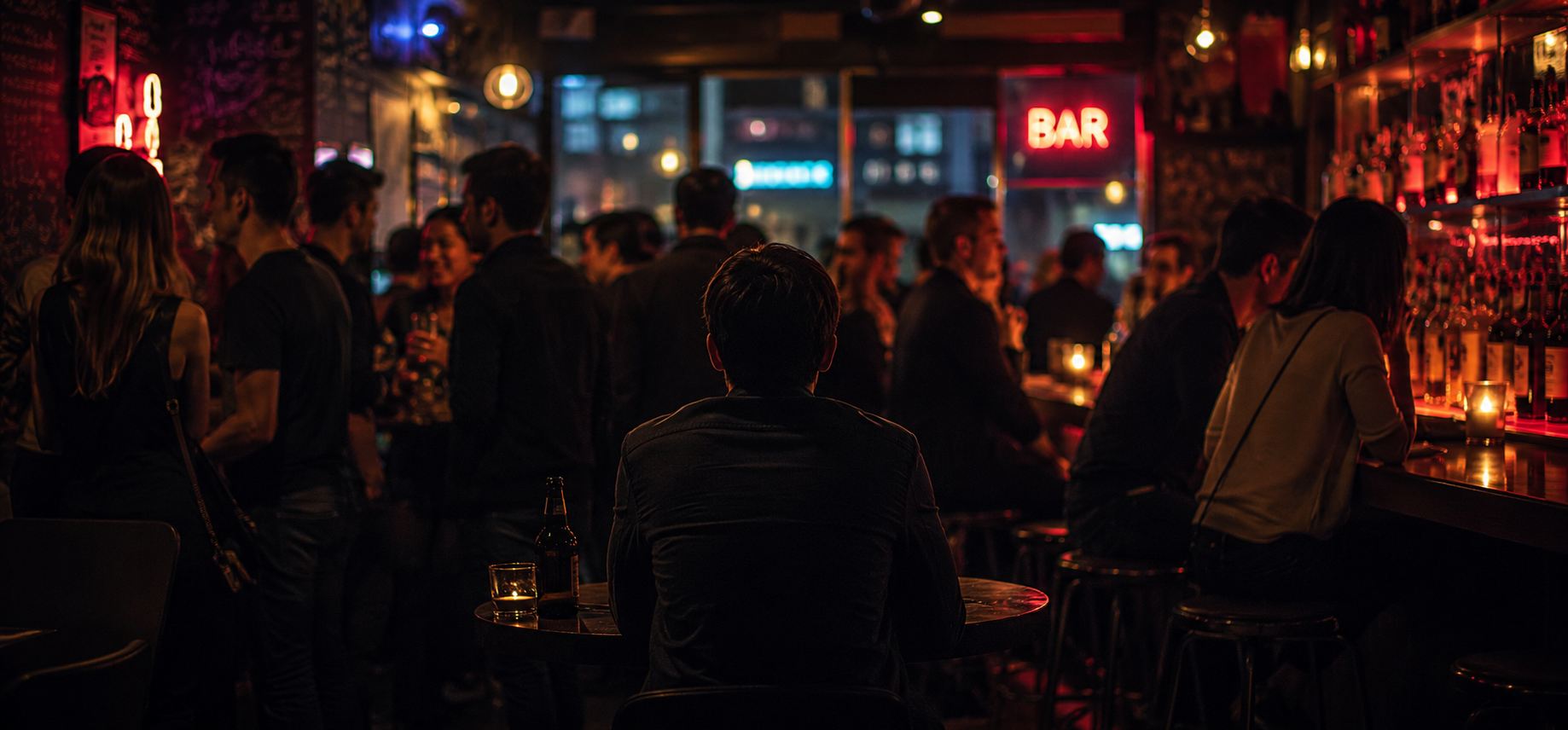
The first 20 minutes can decide your entire night
You walk into a room alone. Nobody has rejected you. Nothing bad has happened. Yet somehow you already feel like you're losing.
You notice that other people seem to have groups. That makes you unusually aware of yourself.
You start thinking about where to stand, what your hands are doing, whether you look awkward and whether anyone has noticed you're alone.
Because you're monitoring yourself, you become more cautious. Less eye contact. Fewer spontaneous comments. Less movement toward other people.
Other people now receive fewer signals that you're open to interaction, so fewer people interact with you.
“See? Nobody wants to talk to me.” The original fear appears confirmed — partly because the fear changed the behavior that produced the result.
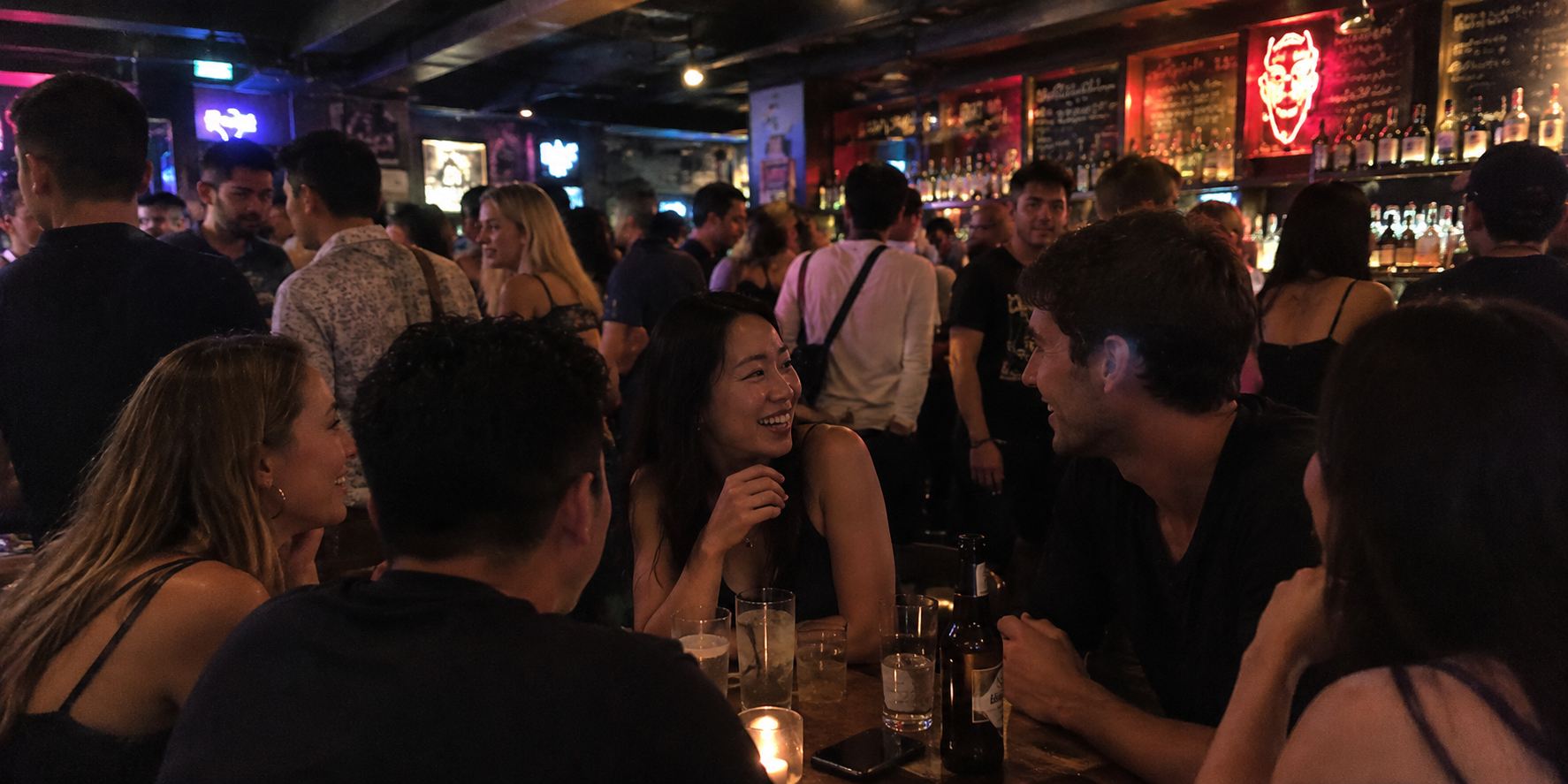
Sometimes the difference between “this night sucks” and “this is amazing” is one interaction in the first ten minutes.
Why can a stranger know your life story after 90 minutes?
Nightlife produces a strange kind of accelerated intimacy: people sometimes tell near-strangers things they haven't told people they've known for months.
Nightlife gives strangers unusual social permission to interact. Talking to someone you've never met isn't an interruption; it's often the point.
You are experiencing the same unusual environment at the same time. Shared novelty gives two strangers immediate common ground.
A normal friendship develops through repeated encounters. A night out can compress hours of uninterrupted interaction into one session.
If you're traveling — or simply don't expect to see the person again — disclosure can feel less dangerous. They aren't embedded in your work, family or existing social network.
Sometimes people become unusually honest precisely because the relationship might be temporary.
Nightlife doesn't necessarily create a new personality. Sometimes it removes enough friction for an existing personality to become visible.
Which leads to one of the strangest things about confidence after a couple of drinks.
Trying really hard to be social can make you less social
The person thinking hardest about making a good impression may have the least attention available for the actual person in front of them.
You want to be liked, funny, interesting or attractive.
Your attention moves inward: Was that joke funny? Am I talking too much? What should I say next?
Every bit of attention spent evaluating yourself is attention not spent noticing the other person's expression, timing, energy and interests.
You may become technically more performative while becoming less responsive — and responsiveness is a huge part of what makes interaction feel natural.
The desire to connect can become the thing interfering with connection.
Why someone can become hotter 30 minutes after you meet them
Appearance arrives first. Then the room starts feeding you new information.
Before interaction, appearance carries a disproportionate amount of information because you don't know anything else yet.
Then you see humor, warmth, confidence, awkwardness, generosity, conversational rhythm and how they treat other people.
You also see how everyone else reacts. Do people light up when this person joins? Do people seek them out? Does the group trust them?
The room effectively provides additional information about the person's social value.
The face hasn't changed. Your model of the person has. And attraction can change with it.
Why changing bars can resurrect a dead night
Same friends. Same city. Fifteen minutes later everybody suddenly has energy again. What changed?
A new environment creates fresh sensory input. That's the obvious explanation — but not the whole one.
Walking to the next venue breaks the seating arrangement and interrupts conversations that may have become stale.
Different people walk beside each other. New pairs talk. Someone who was stuck at the end of the table is suddenly in the center.
The previous room's energy doesn't have to follow you. The group gets a small psychological reset.
Changing venues doesn't only change scenery. It reshuffles the social network.
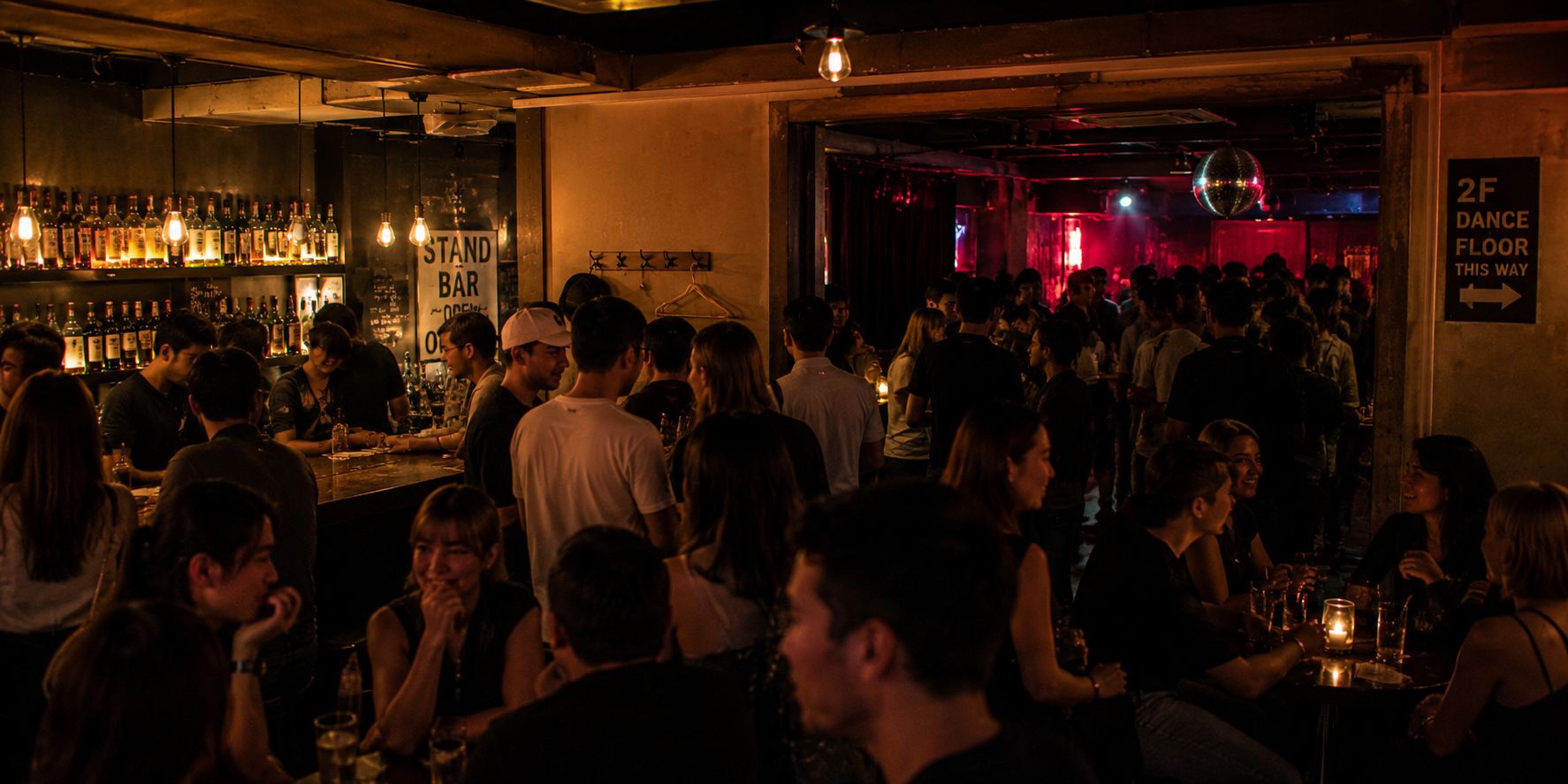
Same people. Different room. Different night.
Why groups of strangers quietly search for a leader
The leader isn't always the loudest person. Often it's simply the person making the room easier for everyone else.
Strangers are constantly solving tiny problems: Who do I talk to? Are we moving? Am I included? What's happening next?
One person starts introductions, pulls in the quiet person, makes the joke, suggests the next stop or bridges two subgroups.
Everyone else now has fewer social decisions to make.
If the decisions keep working, people increasingly allow that person to guide the group's momentum.
Social leadership can be less about controlling people and more about reducing uncertainty for them.
A great venue isn't necessarily the one with the best interior. It may simply be the room that produces the best probability of something happening.
Layout, music volume, standing versus sitting, crowd composition and group size all quietly change who talks to whom.
Why rejection on a night out usually contains less information than you think
Someone doesn't engage. Your brain immediately wants an explanation — and conveniently puts you at the center of it.
A conversation goes nowhere. Someone turns away. Someone isn't interested.
I'm awkward. I'm unattractive. I said something wrong.
You usually can't see relationship status, exhaustion, language anxiety, previous interactions, mood, intoxication, friends waiting or the last train.
The outcome is real, but its cause is heavily underdetermined.
We often create high-confidence judgments about ourselves from extremely low-information social events.
Why one person leaving can suddenly make everyone more fun
Nobody announces that the atmosphere changed. But suddenly everyone is louder, sillier or more relaxed.
People continuously estimate what behavior is acceptable around the people present.
A highly judgmental, dominant or uncomfortable person can make others regulate themselves more carefully.
The social constraint disappears even though nobody explicitly discusses it.
Multiple personalities appear to become more expressive at once.
Group chemistry isn't simply the sum of individual personalities. Each person changes which parts of everyone else's personality are allowed to emerge.
Why a five-hour night becomes legendary because of 15 minutes
Most of the night may have been completely ordinary. Then something ridiculous happens and years later that's “the night.”
A night contains hundreds of small moments, most of which are forgettable.
We don't store every minute equally. Novel, emotional and surprising moments receive disproportionate weight.
One absurd encounter becomes the event everyone retells the next morning.
The remembered night increasingly organizes itself around the memorable episode.
The best remembered night doesn't necessarily contain the highest average enjoyment. It may simply contain the strongest peak.
Nightlife is a temporary social laboratory
Put a room full of people together who mostly don't know each other. Give them limited time, music, attraction, uncertainty, status, novelty and lowered social inhibition. Then watch what happens.
Groups form. Leaders emerge. Attraction changes. Quiet people become central. Confident people become self-conscious. Strangers disclose secrets. Groups split, merge and reorganize. One interaction can redirect someone's entire night.
It's ordinary social psychology happening at unusually high speed.
The psychology is interesting. Being inside the experiment is more fun.
Tokyo Pub Crawl brings travelers, locals and international residents together for a social night out in Roppongi.
See Upcoming Events →KEEP EXPLORING TOKYO
Pick your next rabbit hole.
Practical nightlife, going out solo, Roppongi after dark, the psychology of a night out, and the Japan details most visitors walk right past.